Habitat
Mountain, cliff, open woodland and rugged corridors.
Panthera pardus tulliana · پلنگ ایرانی
EndangeredMountain predatorCorridor species
Mountain shadow: an animal of cliffs, oak woodland, remote ridges and the difficult border between wild movement and human pressure.
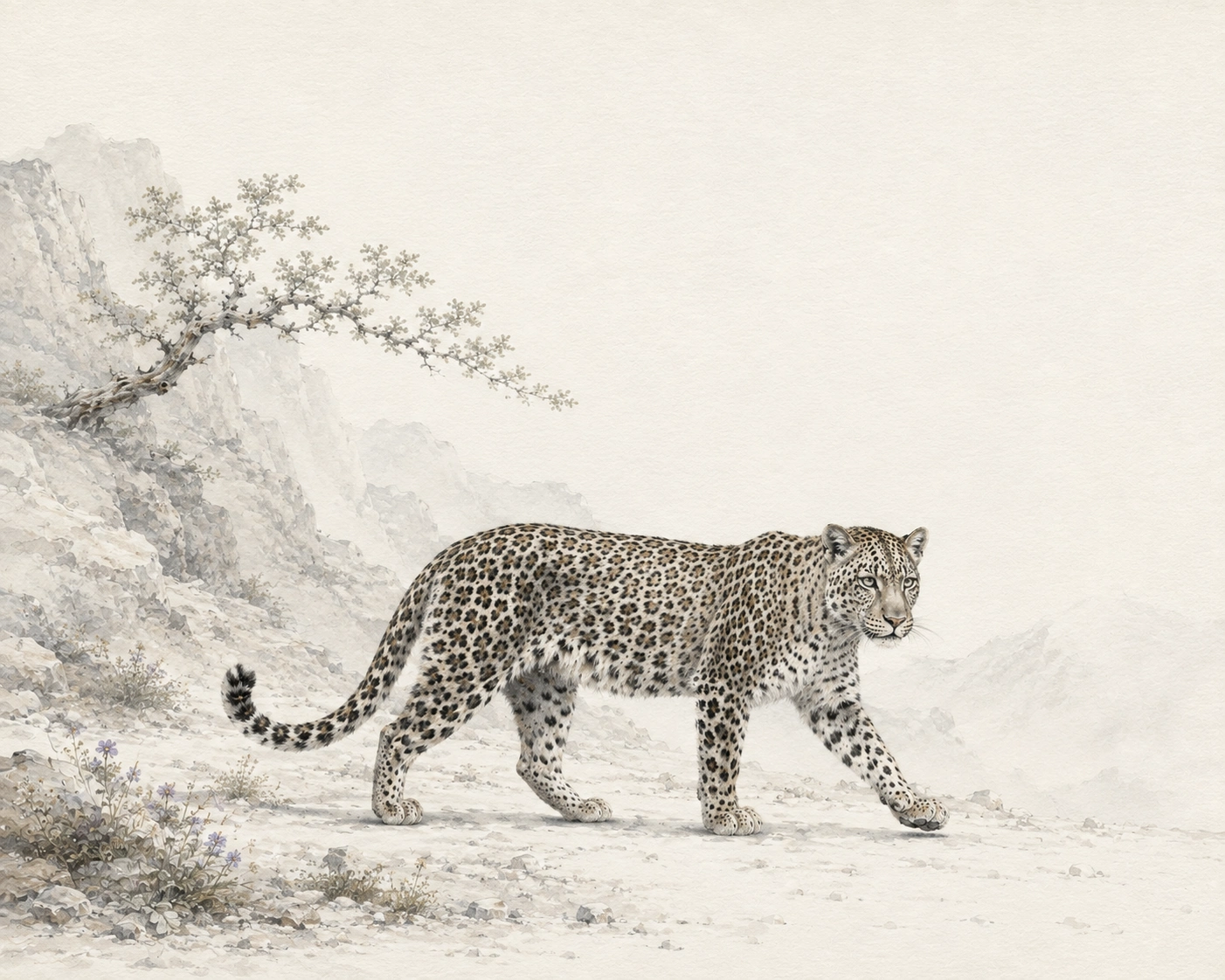
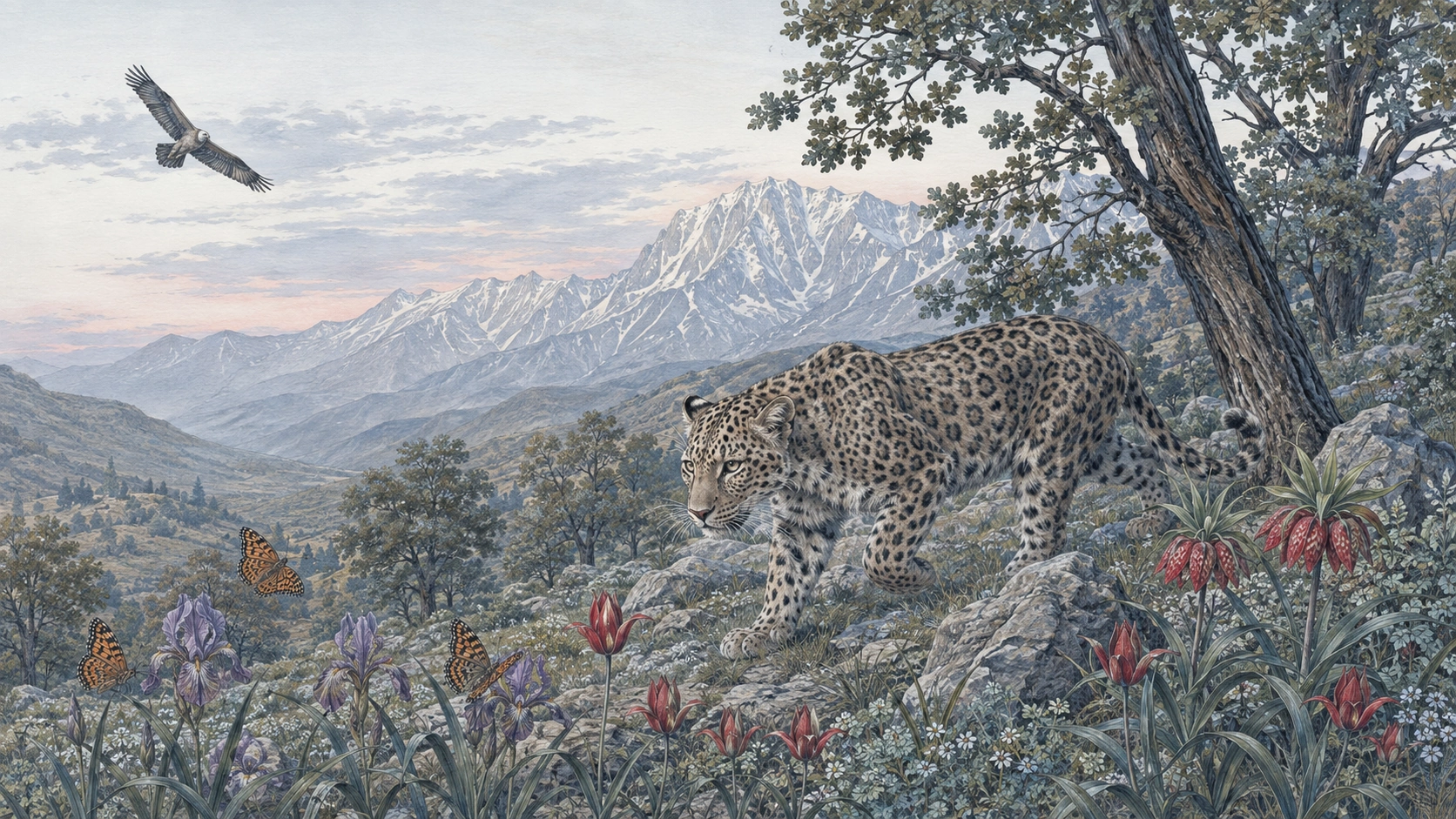
The Persian leopard is a large, wide-ranging predator of broken country. It does not belong to one neat habitat. It moves through cliffs, scrub, oak woodland, high valleys and remote ridges where concealment, prey and safe passage still exist.
That makes the leopard a way to read the mountain system itself. A healthy leopard landscape must also hold prey, cover, quiet breeding space and corridors between protected fragments.
Mountain, cliff, open woodland and rugged corridors.
Wild goats, sheep and other ungulates where populations remain strong.
Fragmentation, conflict, prey loss and road mortality.
It would be easy to treat the leopard as an icon. Persian Wilds treats it as an ecological question: what does a landscape need to keep a large predator alive across generations?
The answer is not a single reserve. It is a system — prey, water, vegetation, ridgelines, low conflict, and enough connected land for young animals to disperse.