Habitat
Riverine forest, woodland edge and protected grazing cover.
Dama mesopotamica · گوزن زرد ایرانی
EndangeredRiverine woodlandConservation return
Return to the trees: a deer whose modern story is inseparable from rediscovery, breeding, reintroduction and habitat care.
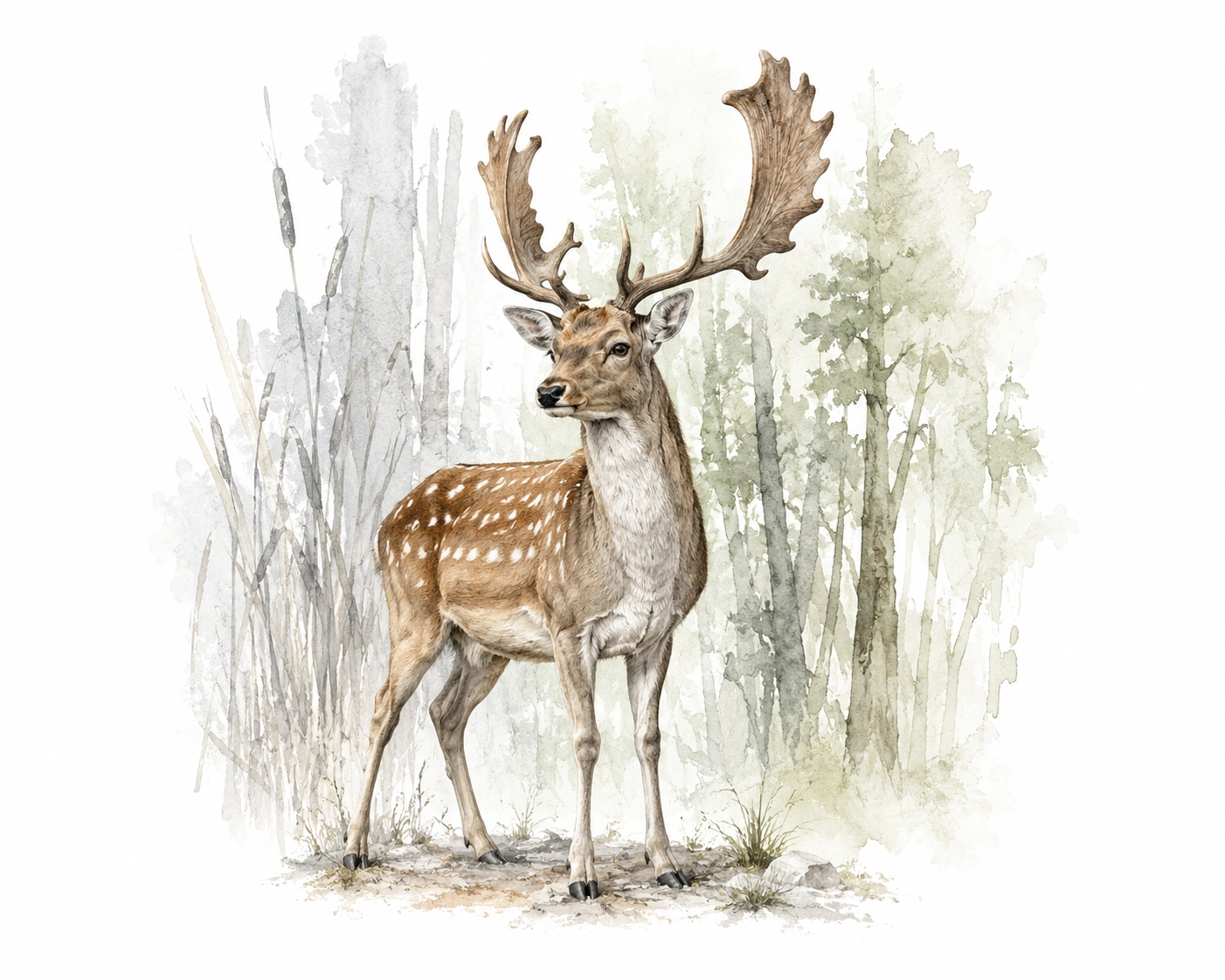
The Persian fallow deer belongs to shaded woodland and riverine systems where water, grazing and dense cover meet. It is not simply a beautiful animal placed in forest; it is an argument for the survival of wooded refuges in dry regions.
Its modern history shows how close disappearance can come before recovery work begins. Captive breeding and return programmes are important, but the archive distinguishes return from security: a released population still depends on habitat quality, protection and genetic care.
Riverine forest, woodland edge and protected grazing cover.
Large herbivore, grazer and browser within wooded systems.
Small populations, habitat loss, isolation and human pressure.
The fallow deer gives Persian Wilds one of its strongest narrative arcs: disappearance, rediscovery, human care and the difficult question of what it means for an animal truly to return.
A future edition should include a timeline of twentieth-century rediscovery and reintroduction, with careful distinction between historical range, managed populations and wild persistence.