Achaemenid · stone
Lotus relief
Read as carved stone, scale, shadow and context—not a repeating border pattern.
This is not a kings-and-dynasties timeline. Persian Wilds follows the things that altered how land could be inhabited: climate refugia, rivers, qanats, gardens, hydraulic systems, roads, orchards and the materials people carried through them.
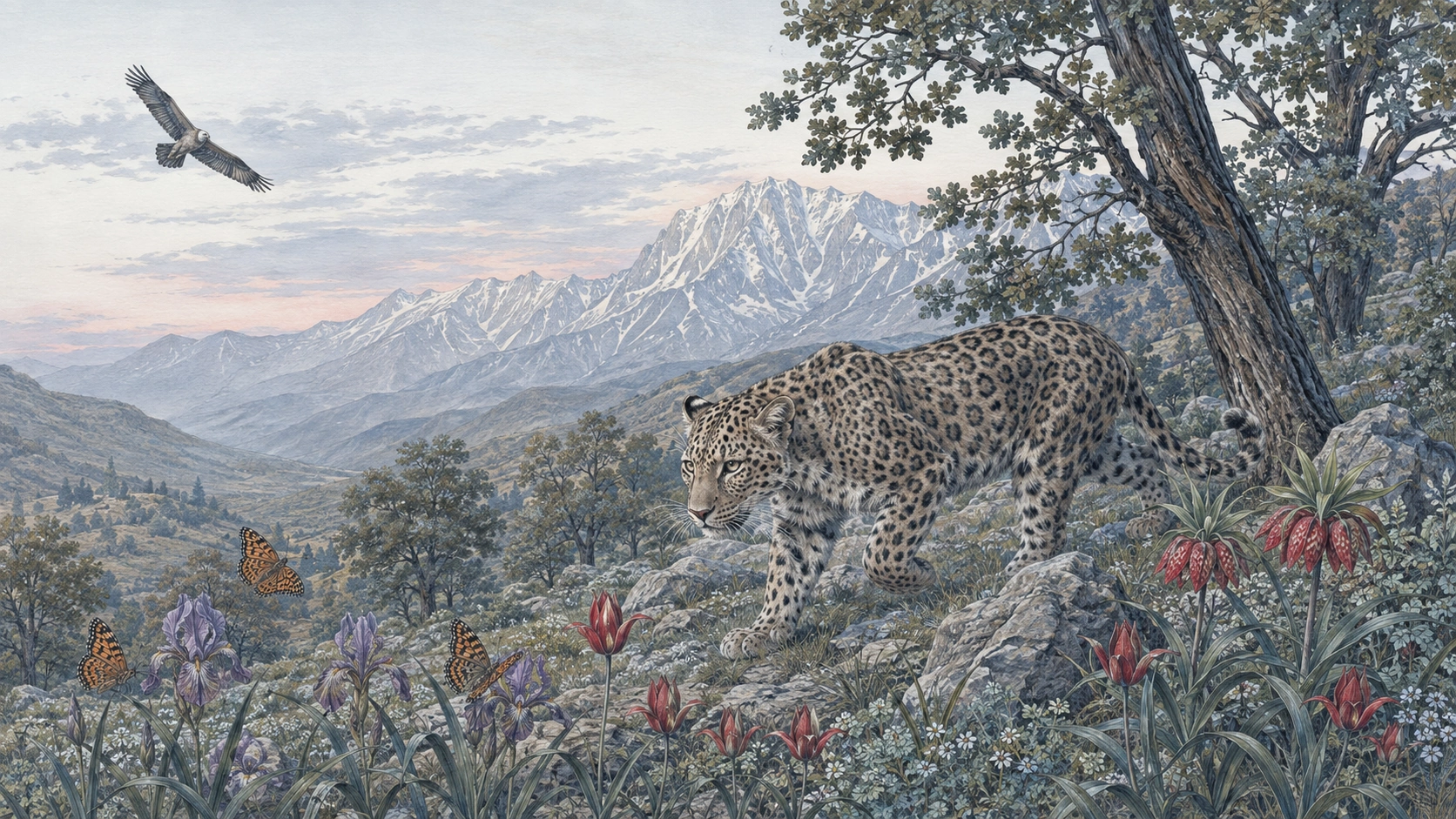
UNESCO places the origin of the forest lineage in a much warmer Northern Temperate world. Glaciations later compressed these forests into refugia; milder periods allowed re-expansion.
UNESCOA complex mudbrick city grew along trans-Iranian trade routes. Changes in watercourses and climate were among the forces associated with its eventual abandonment.
UNESCOGravity-fed tunnels linked aquifers to settlements, agriculture and gardens. UNESCO's inscribed series includes eleven qanats and the social systems needed to keep them working.
UNESCOThe hydraulic ensemble combines diversion canals, dams, bridges, mills and irrigation. UNESCO describes its present form as largely completed in the 3rd century CE, probably on older foundations.
UNESCONames are revised, Red List assessments change and landscapes shift. Persian Wilds therefore treats scientific authority as a living source network rather than freezing a single page forever.
MethodologyYour visual encyclopaedia contains a disciplined material-history bank: Achaemenid reliefs, Luristan bronzes, Sasanian silver, ancient ceramics, hydraulic structures and vernacular architecture. The rule is provenance first, decoration second.
Read as carved stone, scale, shadow and context—not a repeating border pattern.
Fauna and material history meet in openwork horned forms with patina and archaeological weight.
A famous moving-goat sequence becomes a prompt about serial image and motion, not a motif to copy.
Hunt scenes, animal bodies and metal-working technique held together by object provenance.
Bridge, dam, mill, tunnel and river are one engineered landscape.
Architecture as environmental response: shade, air movement, thermal mass and water.
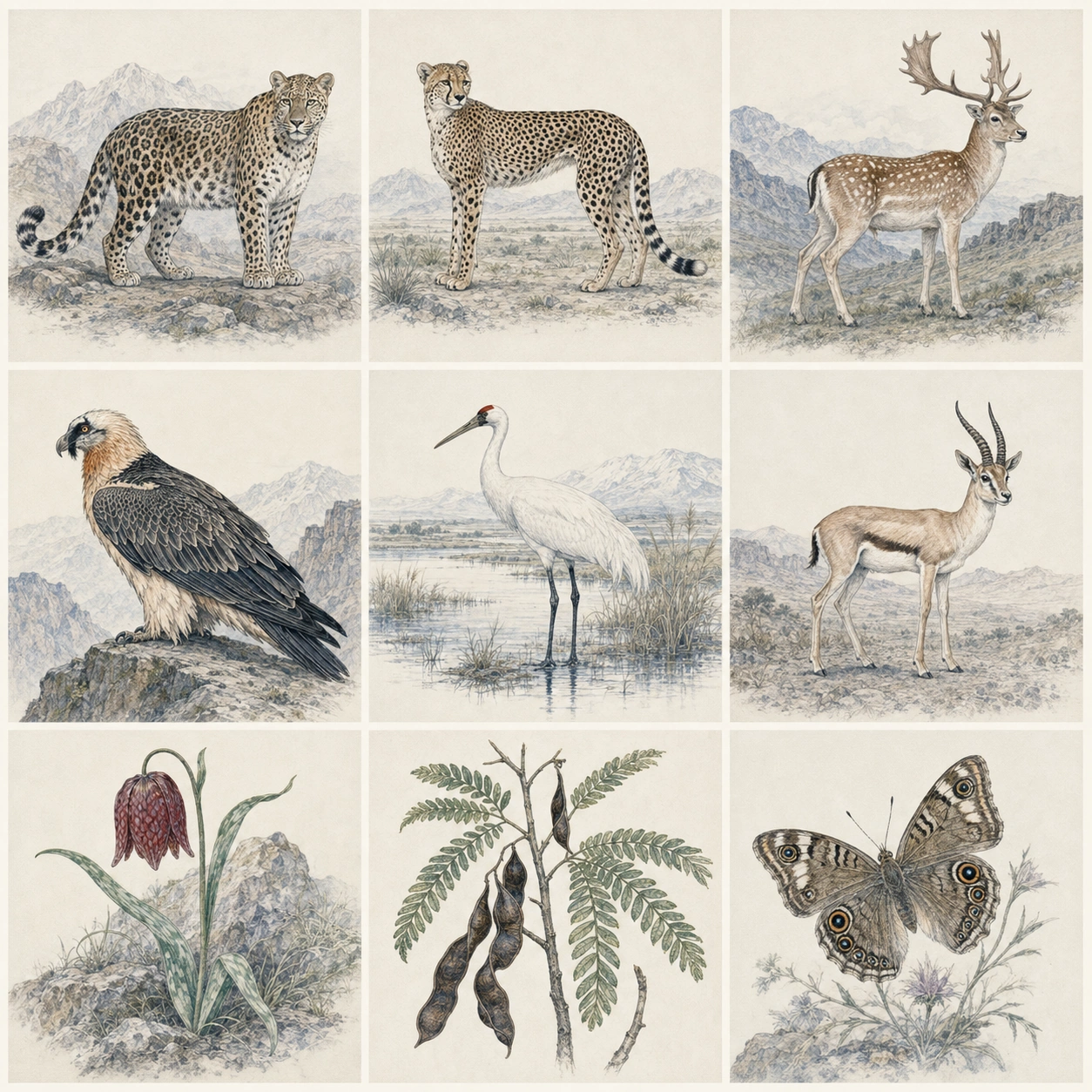
If a historical object does not deepen the story of landscape, material, species, water or human adaptation, it belongs somewhere else—not in Persian Wilds.
Read the field stories