Habitat
Intertidal coast and warm shallow shore.
Avicennia marina · حرا
MangroveNative to IranTidal tree
A salt-tolerant coastal tree that turns tidal mud and shallow water into a three-dimensional habitat of roots, shade, shelter and nursery space.
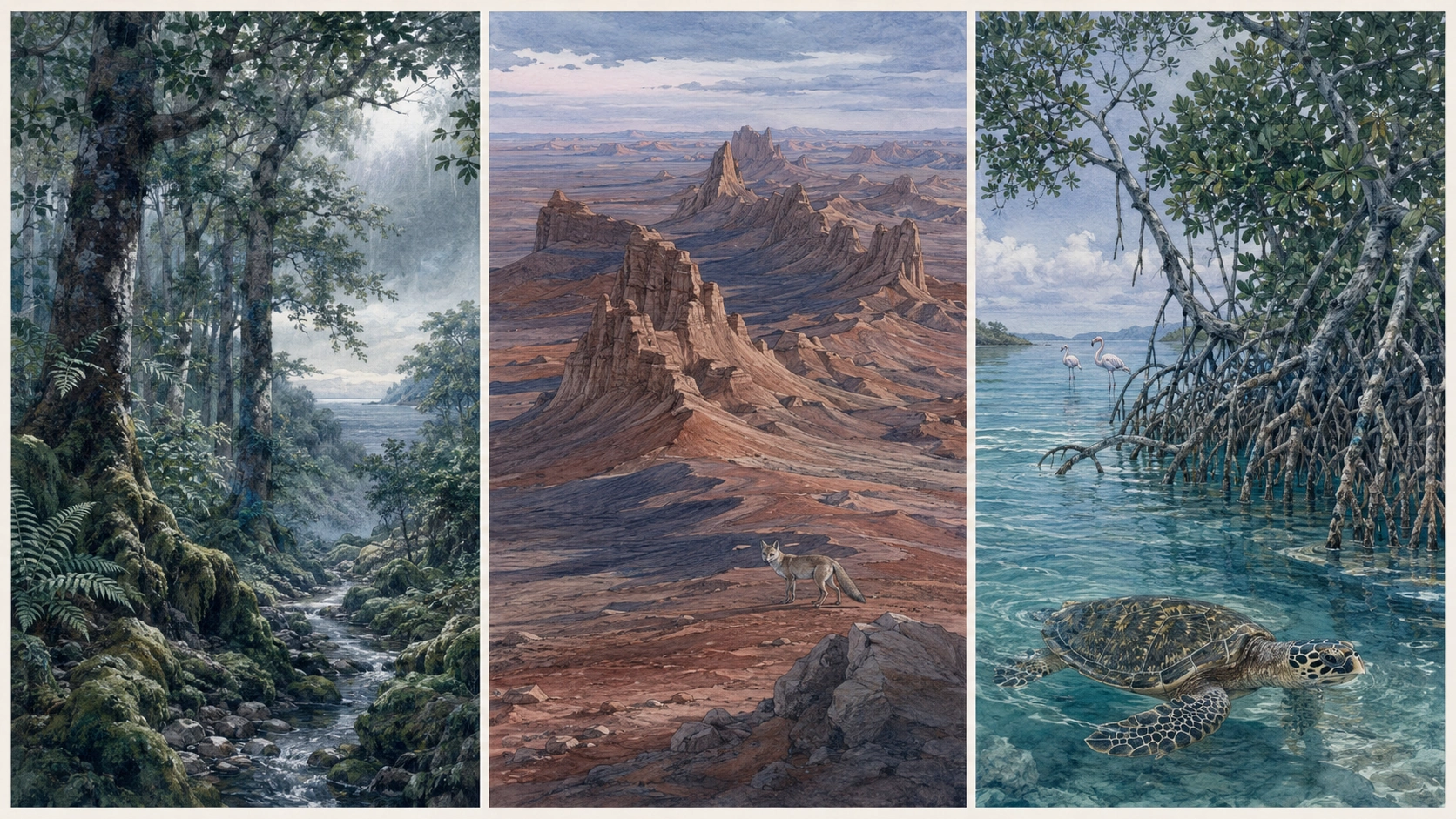
Kew accepts Avicennia marina and records it as native to Iran within a broad Old World range. Mangroves occupy the difficult boundary between land and sea, coping with salt, waterlogged sediments and repeated tidal change.
Intertidal coast and warm shallow shore.
Pneumatophores project upward from waterlogged sediment for gas exchange.
Roots slow water, trap sediment and create shelter for other life.
Mangrove is architecture before it is scenery. One plant changes the physical shape of the shoreline and creates surfaces, shade and refuge used by many other organisms.
The pencil-like roots seen sticking upward from mud are pneumatophores — specialised structures that help the root system exchange gases in oxygen-poor sediment.
The image on this page is an interpretive habitat or archive plate, not a diagnostic specimen photograph.
Taxonomy and conservation claims follow the archive's specialist-source hierarchy and should be read with the dated source record.