Habitat
Saline lakes, lagoons and shallow coast.
Phoenicopterus roseus · فلامینگو
WaterbirdFilter feederColonial
A familiar pink silhouette built around an unusual feeding machine: long legs for shallow water and a specialised bill used to filter small food from water and mud.
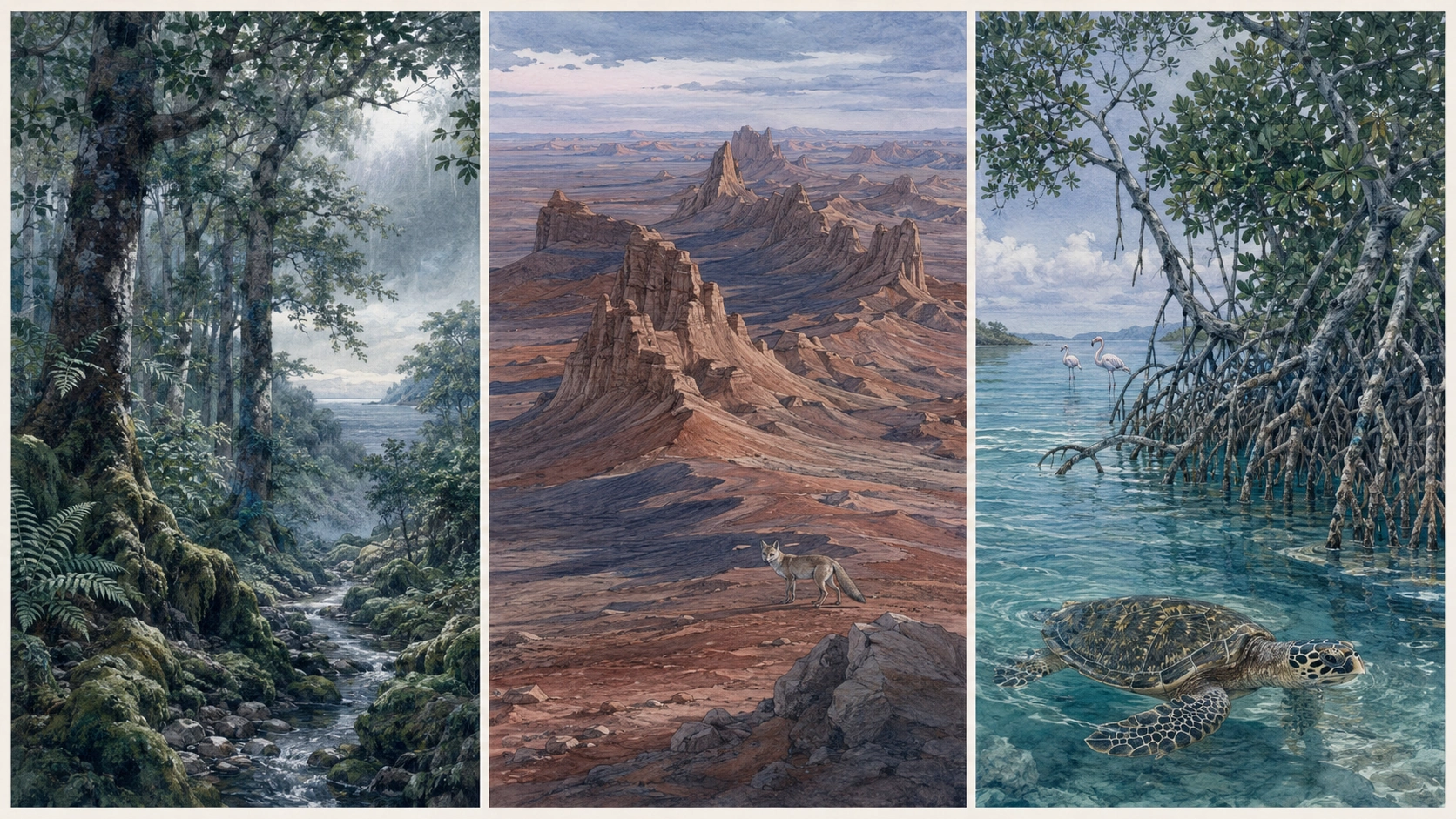
Greater flamingos use saline lakes, lagoons and shallow coastal waters. Their spectacular gatherings depend on water depth, salinity and the food webs of small aquatic organisms that flourish under particular conditions.
Saline lakes, lagoons and shallow coast.
Filter feeding in shallow water.
Water conditions can shift feeding and breeding opportunities.
Flamingos make invisible chemistry visible. Changes in salinity and water level alter microorganisms and invertebrates, which in turn alter where large flocks can feed.
The birds do not simply ‘eat pink food’; pigments from their diet are processed and deposited in feathers, helping produce the colour we associate with flamingos.
The image on this page is an interpretive habitat or archive plate, not a diagnostic specimen photograph.
Taxonomy and conservation claims follow the archive's specialist-source hierarchy and should be read with the dated source record.