Habitat
Desert, semi-desert, open steppe and protected arid landscapes.
Acinonyx jubatus venaticus · یوزپلنگ آسیایی
Critically EndangeredOpen countryIran's last range
Beyond the last line: a desert-adapted lineage surviving where prey, space and protected corridors still hold together.
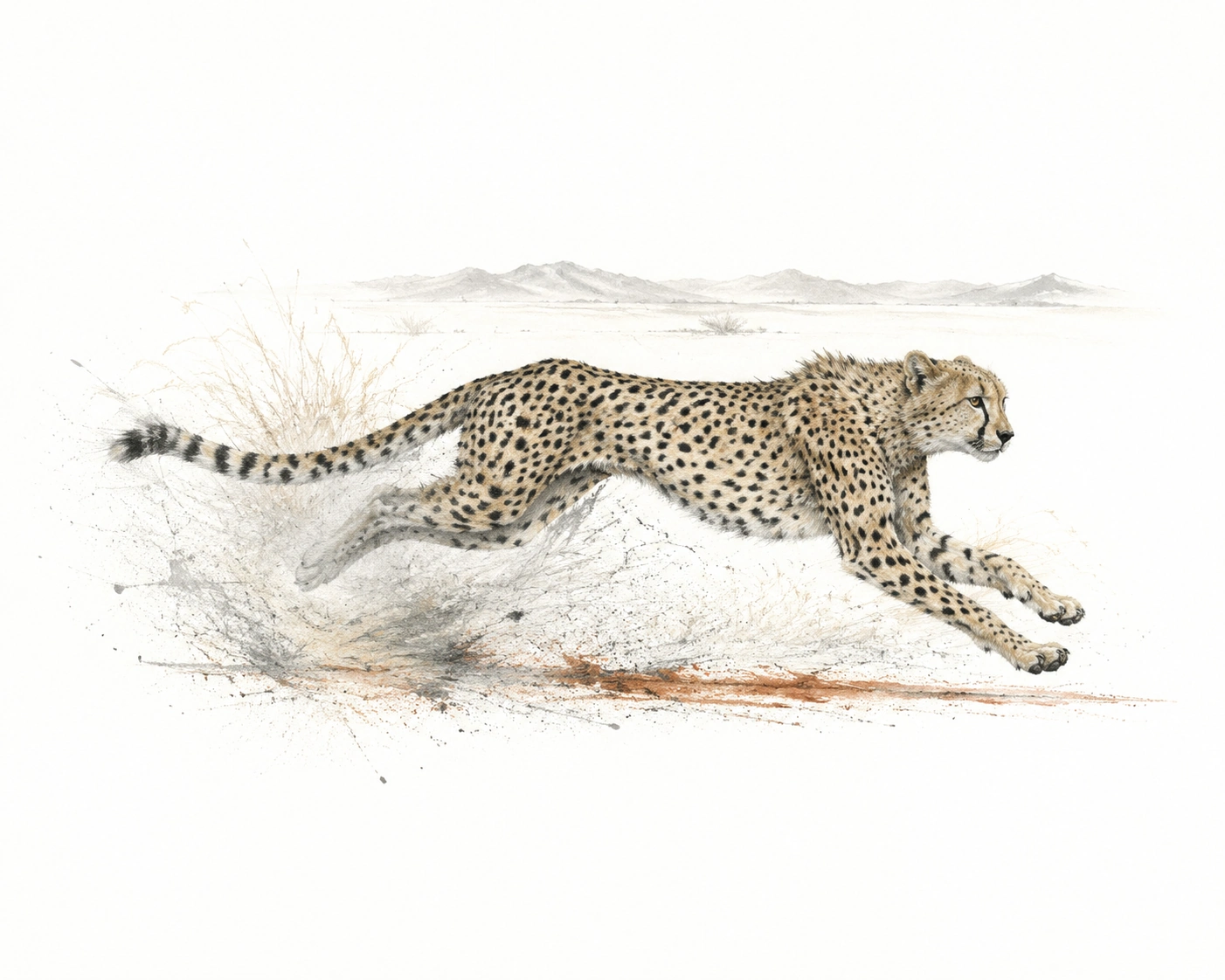
The Asiatic cheetah is a coursing predator of open dry country. Its hunting logic depends on visibility, speed and the ability to move through large connected landscapes without being forced into conflict or isolation.
In Persian Wilds, the cheetah is the archive’s clearest lesson in fragmentation. A landscape can look enormous to a human and still be too broken for an animal that needs continuity.
Desert, semi-desert, open steppe and protected arid landscapes.
Small and medium ungulates where dryland food webs remain intact.
Roads, prey decline, fragmentation and very small population size.
The cheetah’s story should never be written as speed alone. Speed is the visible part. The deeper story is the landscape that lets speed still matter: long sightlines, connected reserves, quiet breeding areas and enough prey to make pursuit possible.
Touran and neighbouring arid landscapes matter because they show that recovery is not just about saving individuals; it is about keeping a whole dryland system functional.